Hardened before you arrive
Every skeleton has already been through the gates it will later enforce on your build.
01 · A year of this
Agents will take shortcuts you never approved. Byrth watches every action, confirms every claim against evidence, and writes the record where nobody can edit it. Including us.
Generated is not done · Claimed is not done · Done has to be confirmed
It writes faster than any team you could hire. You still cannot put a customer on what it hands you.
The task is ticked. The file exists. Nothing ran. You find out three days later, from a customer.
Byrth assembles from hardened foundations. Multi-tenant data, auth, billing, events, isolation. Already built, already proven.
Tests pass. Scans come back clean. Isolation is proven with real tokens against a live boundary. Progress is computed, never typed.
The Byrth of a new era
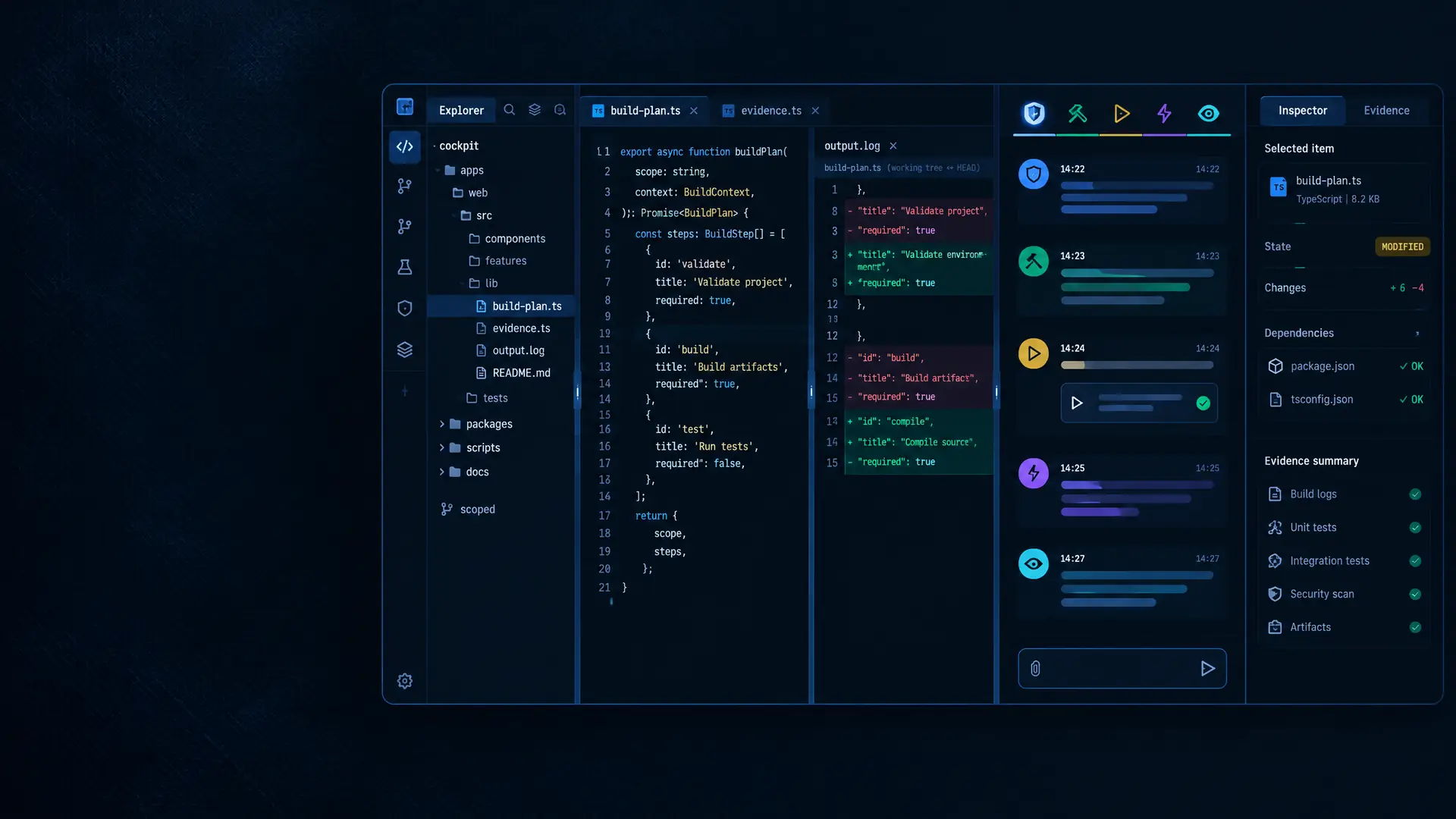
One placeCode, agents, version control, gates, evidence and cost on one surface.
Right orderThe foundation is never invented. Dependencies are enforced, not suggested.
Every claim confirmedProgress is computed from evidence, never reported by the agent that did the work.
THE PROBLEM
You have felt this. The demo arrives in an afternoon. The prototype looks finished. The agent reports every task complete, in a tone of total confidence, and you believe it, because there is nothing else to believe.
Then you try to use it. A button does nothing. A screen renders against a backend that was never wired. A fix from Tuesday quietly broke something from Monday. And the same system that made the mistake is the only thing telling you whether it was fixed.
The tool is astonishing. The output is not trustworthy. Those two things have been true at the same time for a year, and no amount of better prompting has closed the gap.
The system that took the shortcut cannot be the only system that says the work is done.
WHAT ACTUALLY GOES WRONG
The task is marked complete. The file exists. Nothing was run, nothing was tested, nothing was deployed. You discover it later, usually from someone else.
It invents a file that does not exist. It rebuilds a function you already have. It forgets a decision you made an hour ago, because the conversation is not the architecture.
A small correction spreads across four unrelated files. The fix introduces a defect. The next fix introduces another. Eventually you are debugging the repairs rather than the product.
The code works inside the conversation and fails inside the system. Auth before schema. Billing before tenancy. Nothing in the model knows what had to exist first.
Repeating the same instruction. Correcting the same behaviour. Re-establishing context after every reset. You were supposed to be freed by the agent. You became its supervisor, its memory, and its QA department.
Thousands of lines you did not write, arriving faster than anyone can read them, and you now own every one.
The model is here. The editor is there. Version control, the pipeline, the scanner, the secrets, the hosting, the spend, the project state, all somewhere else. You are the only thing connecting them, by hand, every day.
Byrth was built for all seven. The rest of this page is how.
THE ILLUSION OF DONE
AI is extraordinarily good at producing things that look like completion. The artifact appears. The checkbox fills. The report is confident and specific and wrong.
This is the failure mode with no error message. Nothing turns red. There is no stack trace, no failing build, no alert. There is only a system that looks finished, and a gap between looking and being that you find out about at the worst possible moment.
It is not a bug in one tool. It is what happens when the thing doing the work is also the thing reporting on it.
A file exists. not done
It compiles. not done
A test passes. not done
The agent says implemented. not done
Evidence confirms it ran through the real system. done
Generated is not done. Tested is not done. Claimed is not done. Done has to be confirmed.
ANSWER ONE · RIGHT ORDER
Most of what goes wrong in an AI build goes wrong in the foundation, and it goes wrong silently. Row level security never enabled. An endpoint with no authentication. Access control enforced in the browser instead of the server. The agent produced exactly what the prompt asked for and skipped everything the prompt did not think to mention.
Byrth does not generate foundations. It assembles them from a catalog of hardened, versioned skeletons that already carry the things nobody remembers to ask for.
Row level security, tenant identity from verified token, negative isolation tests
Managed identity, MFA, session revocation, token rotation
Subscription plus usage metering, invoicing, proration
Append-only ledger, replay, ordering guarantees
Sandboxing, tool scoping, run budget ceiling
Every skeleton has already been through the gates it will later enforce on your build.
You get a known artifact with a version number, not a fresh interpretation of your prompt.
Isolation, authentication, and secret handling are in the foundation. You cannot forget to ask for them.
RIGHT ORDER
Every module is a node in a dependency graph with declared prerequisites. Byrth blocks out-of-order work rather than discouraging it, because doing it early is exactly what causes the rework.
Hard dependencies are blocked outright. Soft dependencies are advised, so one person can safely run several tracks at once.
LIVE EXECUTION CYCLE
selects the next safe change
const change = nextSafeStep(project)return brief(change, expectedEvidence)changes only the instructed surface
await instruction.fromRunner()monitors Builder's concrete execution
await evidence.fromRunner()The Advisor chooses the next safe change and writes the expected evidence into the instruction.
briefblocked: schema not confirmed
The proven pathwayA phase-gated plan built for what you are actually making. You never face a blank page or guess the order.
Next best stepOf everything open right now, the one task that clears the most blockers, in plain English, with the reason it beat the alternatives.
THE SYSTEM, NOT THE PROMPT
The conversation is not the architecture. The prompt is not the architecture. The context window is not the architecture.
ATLAS is. It reads your repositories, your workflow runs, your scanners and your cloud spend, and it holds the system so no agent ever has to reconstruct it from chat history.
The one task that clears the most blockers, why it beat the alternatives, and what it unlocks. Plus the ones you can safely run in parallel, which is the difference between a plan and a bottleneck.
Confirmed progress per module. A nightly pass that catches bugs, security findings, and fixes that quietly failed to stick. Two independent models auditing high-stakes changes, with their disagreements shown rather than averaged.
Once a module's core is confirmed, authorise Byrth to finish it. See Block 15.
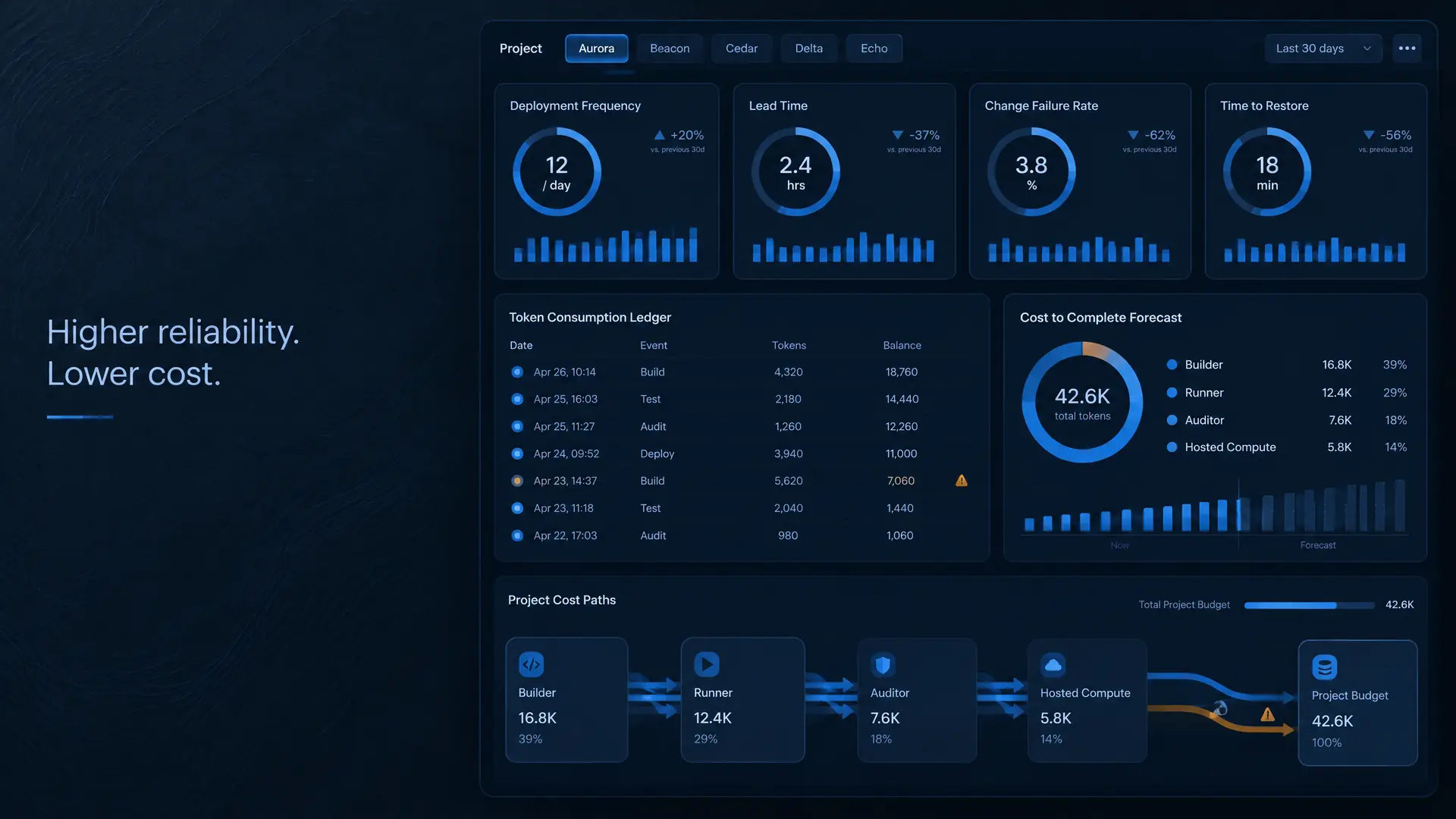
Spend beside every project and a portfolio total, with alerts before the invoice. Cheap models on boilerplate, strong models on architecture, and a budget ceiling that stops and asks rather than quietly spending.
The Console
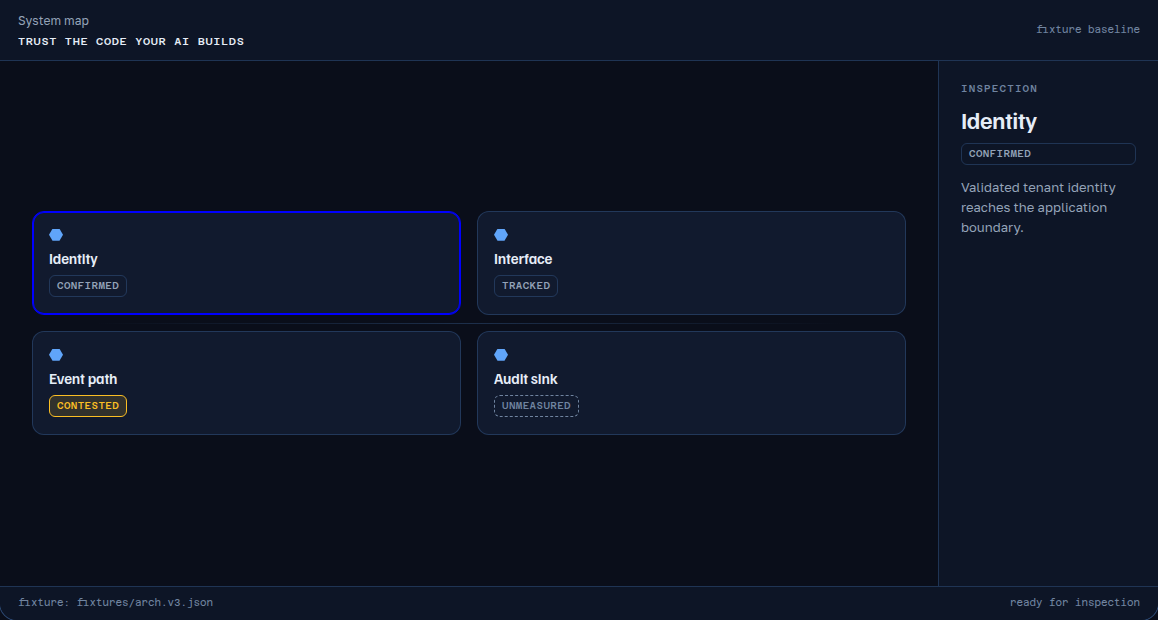
The interface below is the actual product. The data in it is a fixture set, not a live customer, and it is labelled the same way it would be labelled in the product.
Architecture
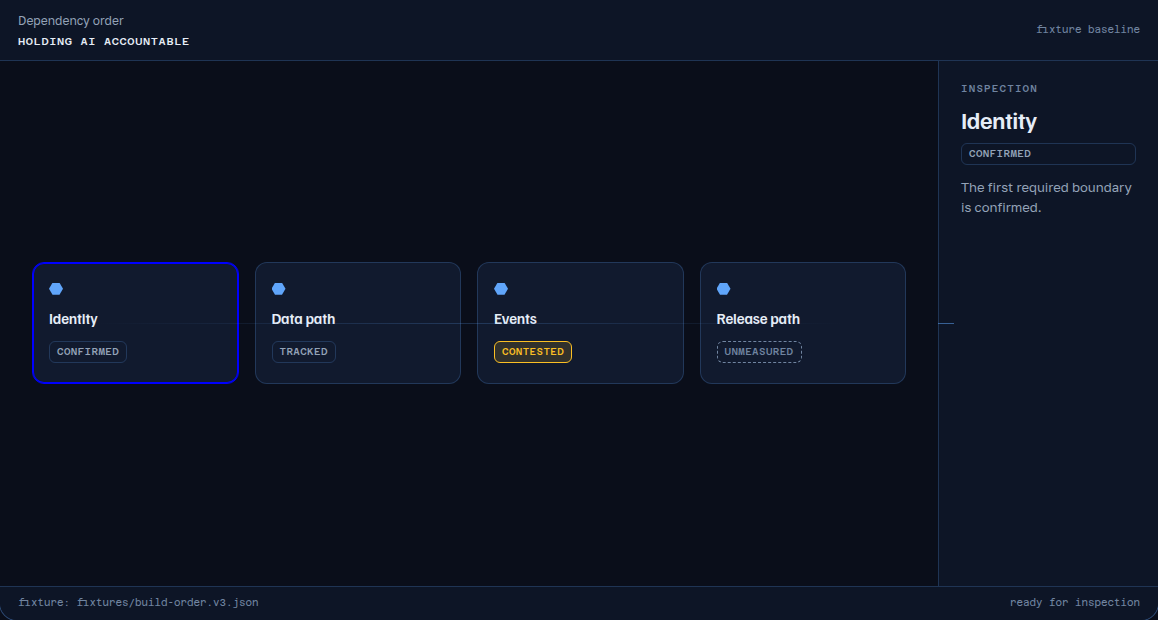
Build order
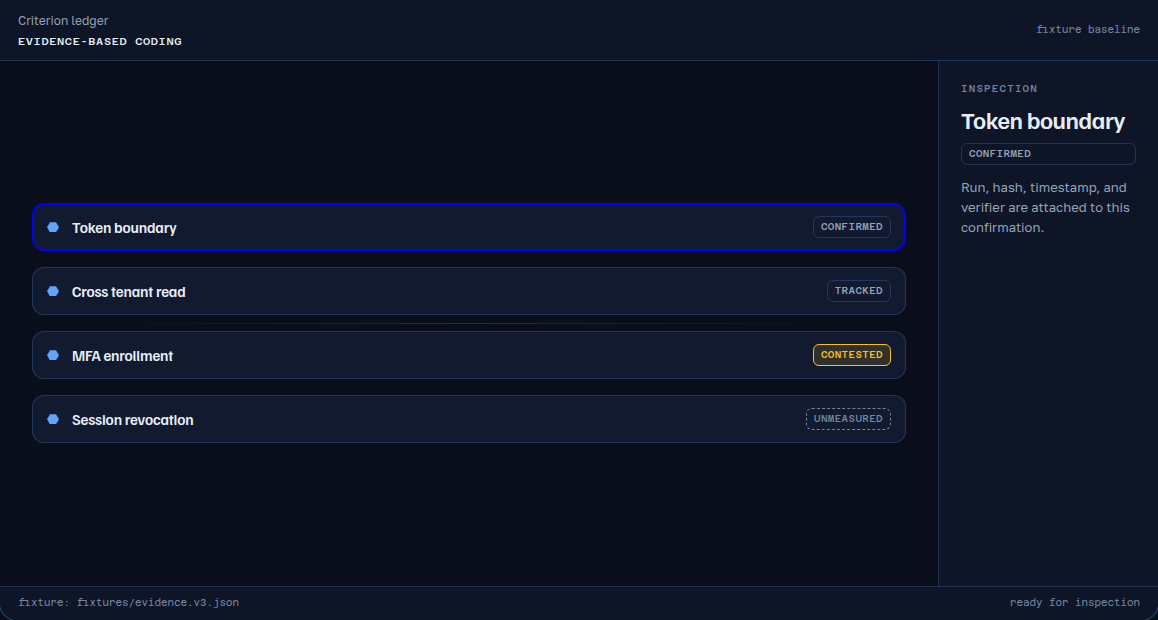
Evidence
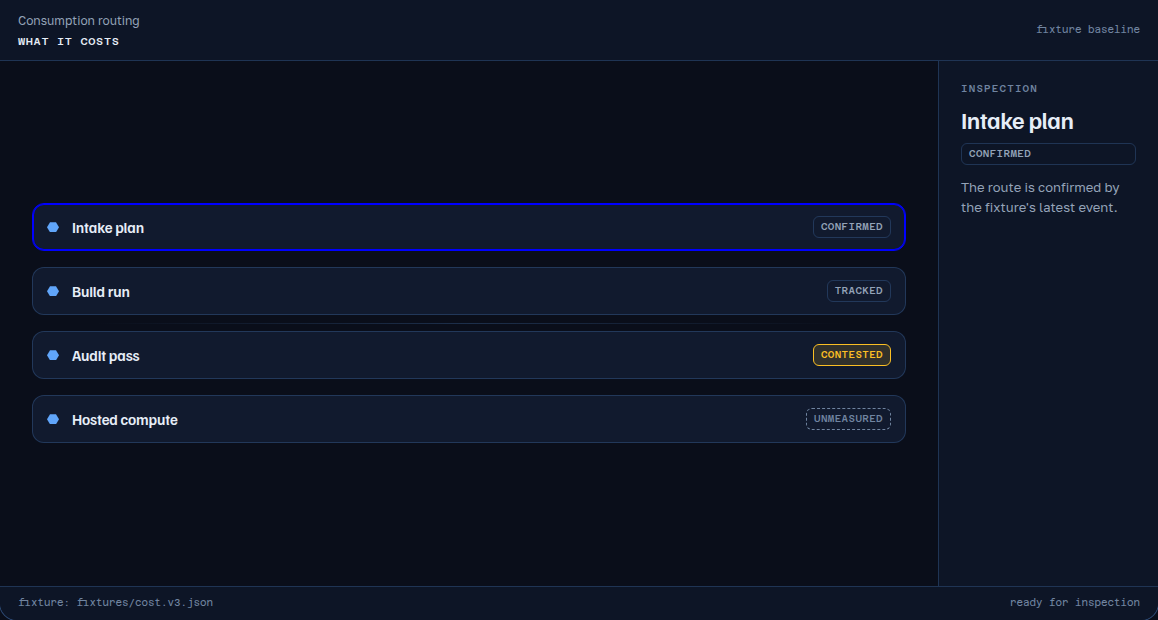
Cost
↳ Try this
The wiring, rendered from what is deployed. Not a diagram that went stale in a week.
The interactive console needs a wider screen. These are captures of the same four screens.
ANSWER TWO · EVERY CLAIM CONFIRMED
Every module carries criteria a machine can check. A test that passes. An endpoint that returns a code. A scan that comes back clean. An isolation probe that fails to cross a tenant boundary.
A criterion is confirmed when a real event proves it, and in no other way. Confirmed progress is the arithmetic on those criteria. It cannot be edited, it cannot be overridden, and when evidence expires the metric moves without asking anyone.
One metric can only answer one question, and the question everyone already asks is the one that lies to you. So Byrth keeps three.
Confirmed is the claim, earned from criteria a machine checked.
Audited is how much of that claim survived the Auditor.
Wired is how much has carried real traffic, end to end, in production.
A build where Confirmed runs far ahead of Wired is the shell that looks finished. Byrth puts a number on that distance and calls it drift, because until somebody names it, nobody fixes it.
Demonstration. Sample module.
Confirmed is 27 points ahead of Wired.
is the claim, earned from criteria a machine checked.
is how much of that claim survived the Auditor.
is how much has carried real traffic, end to end, in production.
The Auditor has raised something and it remains visibly unresolved. The bracket does not reduce confirmation.
Simulate an event
Ready. Filled arcs are confirmed. Dotted remainder is unmeasured, not zero.
EVERY METRIC IS A DOOR
Run ID, commit, timestamp, verifier identity
Probe output, both tenant IDs, timestamp
The Auditor's finding, the original claim, why it does not hold
no criterion event has ever fired. this is not zero. this is unmeasured.
Look at the fourth row. Byrth separates failed from never measured, and it will not quietly count an unmeasured criterion as zero to make the total feel comfortable. Unmeasured is its own state, with its own metric, sitting in plain sight.
Every metric traces to an event that actually happened. Remove the evidence and the metric goes with it, on its own.
Confirmation goes to an append-only ledger. It cannot be revised later to make a chart look better. Not by you, not by an agent, not by us.
Click any figure anywhere in Byrth and land on the commit, the run, the output, and the second it passed. No exceptions and no unsourced figures.
THE AUDITOR
Byrth runs an agent whose entire mission is to prove the work is wrong.
It does not write code. It does not get credit when a build lands. It does not get a vote on shipping. It has one assignment: find the shortcut, name it, and put it in front of you before it becomes your problem.
It is pedantic. It reopens things you were sure were closed. It will flag the module you were about to demo, on the morning you were going to demo it. It does not care that the deadline is Friday.
You are not going to enjoy its reports. You are going to sleep.
The builder is rewarded for finishing. The Auditor is rewarded for finding what finishing missed. Two agents with the same incentive produce agreement. Two agents with opposed incentives produce the truth.
The Auditor does not negotiate with the builder and cannot be prompted into agreement. Its finding goes to a supervisor that can read the code but cannot write it, and the supervisor decides.
Every finding is written to the ledger whether it was resolved, disputed, or waived. A waiver is a record, not an eraser. Six months from now you can see exactly what was known, when, and who accepted the risk.
Every other product in this category is trying to make its agent more agreeable. We built one to argue.
GOVERNANCE
A phase does not close because someone says so. It closes because the gate exits clean.
Independent verification at every boundary, scored one to ten. Below eight and the phase loops back. The verifier is never the builder.
Security gating that runs continuously, not as a pre-launch scramble.
Independent review plus a second-model audit from a different lineage, so one model's blind spot is not the whole system's blind spot.
Which model runs which task, at which cost tier, with a ceiling that escalates instead of overspending.
A scheduled sweep that opens a ticket when something drifts. It never auto-refactors behind your back.
An executor that writes. An auditor that attacks. A supervisor that reads both and decides, and cannot write. Three agents, opposed on purpose.
Regression is a gate, not a hopeProblem three on this page is fix one thing, break another. Byrth runs the confirmed criteria of every dependent module after any change. A fix that breaks a neighbour does not merge, and the finding names both.
Criteria are graded before they countA vague criterion is worse than no criterion, because it produces a metric that feels earned and is not. Byrth structurally rejects weak criteria with a named reason, and flags ambiguous ones out of the denominator entirely rather than letting them quietly inflate your progress.
CONTROL
Byrth's agents do the work: the terminal, the migrations, the git operations, the tests, the scans, the fixes. What they do not do is decide. Every merge, every deploy, every migration against a real environment waits for a person.
When Byrth needs you, you get three things. One plain sentence about what changed, a safety verdict, and the exact button to click.
Autonomy is a feature. Accountability is a product.
VISIBILITY
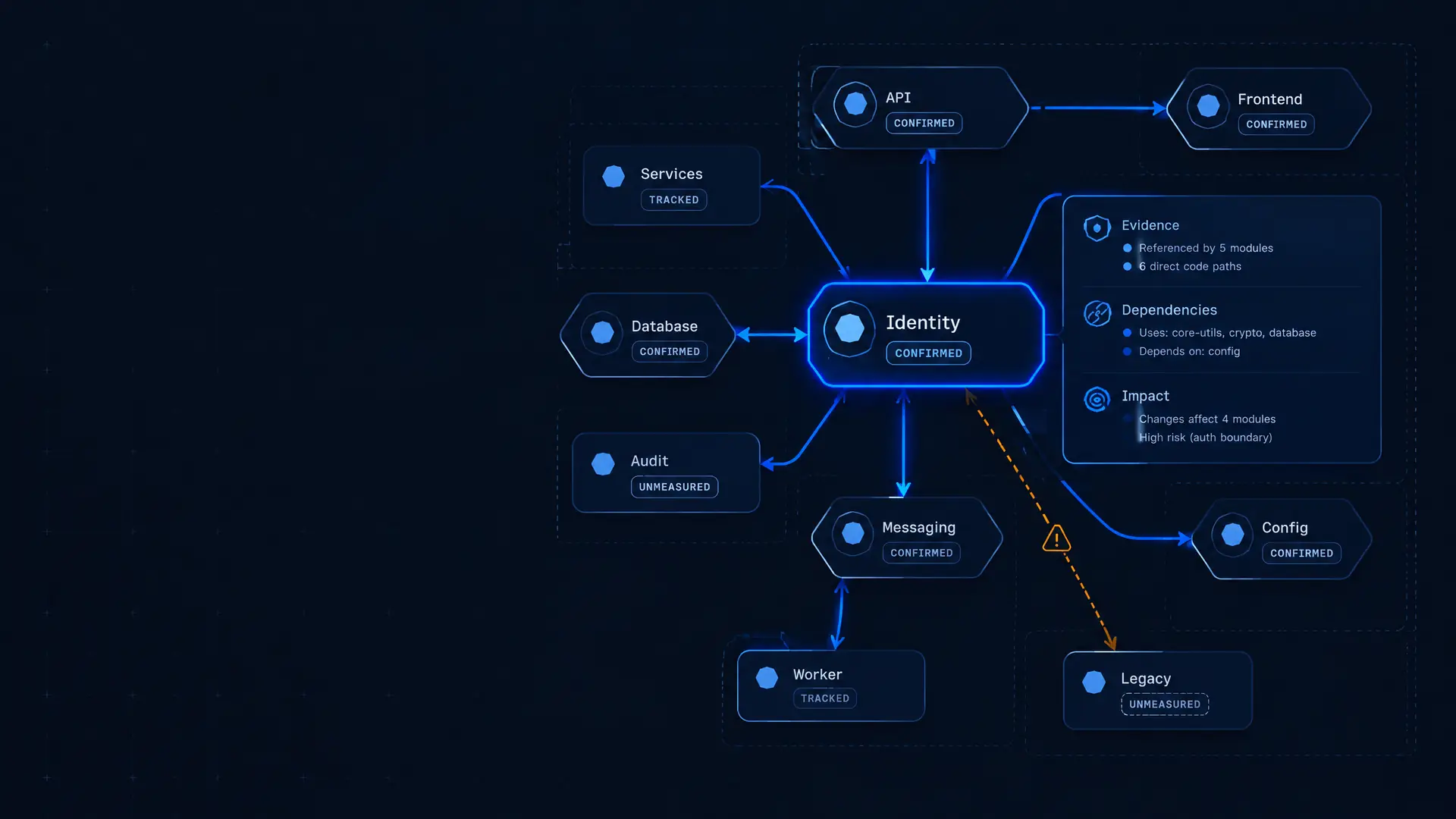
Byrth wires your platform end to end, database to API to auth to billing to events, frontend to backend. Then it draws the whole thing, live, and hands you the pen.
This is not a diagram somebody made in Figma after the build. It is not documentation that went stale in a week. It is the system itself, rendered from what is actually deployed, updating as things change.
API is connected to Identity, Events, Data, and Interface.
Every connection between every component, in one view, in plain labels rather than internal names. When someone asks how auth reaches billing, you point.
The flow chart is editable. Move a dependency and Byrth revalidates the entire graph, then tells you exactly what you just broke and what would need rebuilding, before you commit to it.
An edge carries the Byrth Mark when the connection has been tested end to end with real traffic. An edge that exists in code but has never carried a real request is drawn, and it is drawn dark. You can see the difference across the whole system at a glance.
THE PART AFTER THE DEMO
The prototype arrives in an afternoon, and it creates an expectation that the project is nearly finished. Then comes everything the demo never needed. Edge cases. Validation. Permissions. Errors and retries. Migrations and rollback. Failure states. Accessibility. Logging. Live data. Performance. Cleanup.
That is where apparent velocity collapses, and it is where most AI builds quietly stop.
Auto-Finish is built for exactly that stretch. Once a module's core is confirmed, you authorise Byrth to complete it: edge cases, validation, failure states, accessibility, structured logging, tests for uncovered paths, documentation, and the removal of every TODO, dead path and mock.
It never builds from scratch. It never skips a gate. It quotes the credit cost before it runs. You still approve the merge.
AI made the first eighty percent almost free. Byrth was built for the part that comes after the demo.
ANSWER THREE · ONE PLACE
Your cockpit is version control. Your coder is in another window. The pipeline is somewhere else, the scanner somewhere else again, the secrets in a file you should not have, the spend on a dashboard nobody opens, and the project state in your head.
Nothing connects them except you, carrying context by hand, every day, and losing some of it every time something resets.
One surface. One record. One place where the state of the thing is the same for everyone who looks.
THE RECORD
Anything currently confirmed carries the Mark. Every criterion met by real evidence, nothing expired. Take the evidence away and the Mark comes off by itself. Nobody removes it, and nobody can add it.
The complete record for a module or a release. Every criterion, every gate, every approval, every timestamp, every hash, written once to a ledger nobody can edit. When someone asks how you know it is safe, you do not explain. You export.
The date your platform is projected to be complete and confirmed. It moves when reality moves. When you reach it, your platform is not launched. It is born, with a full record of everything that had to be true first.
FOUNDATION
Tenant separation is enforced by the database itself with row level security, not by application code that one wrong query routes around.
Cross-tenant isolation is verified by probes using real tokens attempting a real crossing. If the crossing succeeds, the gate fails. Every run, not once in a policy document.
Never from a header, a query string, or a request body. Those are the escape hatches, so they are closed.
Every credential lives in a managed vault. The database stores metadata only: which tool, which scope, last rotated. Never a value.
It reads cost data to report and meter it. It does not pay invoices, move funds, or store payment instruments. There is no code path where it could.
Role-based access, approval workflows, and an append-only trail of what happened, who approved it, and when.
ON OURSELVES FIRST
Byrth was built under Byrth's own doctrine, through its own gates, with its own phase verifier scoring its own phases and refusing the ones that did not clear. Every architectural decision is on record. Every phase closed because a gate exited clean with the full output pasted into the report, or it did not close.
Here is the part that would end most companies' marketing pages, which is why it is on ours.
Our own confirmed progress currently computes to zero.
Not because the platform is broken. Because the write path that produces confirmation events does not exist in production yet, and Byrth reports unmeasured as unmeasured rather than rounding it up to something comfortable. A metric reading zero is an integrity failure, not a gap, and we would rather show you a zero we can explain than a figure we cannot.
That is the entire thesis, applied to us, on the page where it costs us the most. If we will not fake it here, you can trust what it tells you about your build.
Follow the buildPRODUCTION EVIDENCE STATE
UnmeasuredNo confirmation events available.You can see the product. You cannot assemble the stack, you should not be making forty architecture decisions in the right order, and you do not have a development team or a project manager to hold it together.
Byrth is both. It builds the platform and it plays the project lead: what to do next, whether it actually worked, when you will genuinely ship, and what it costs. You never open a terminal.
See how a build worksYour team adopted agents in a month. Your review capacity did not change. You are now accountable for a volume of code nobody read, and the agent said it was done is not something you can put in front of an auditor.
Byrth is the layer: independent phase verification, an adversarial auditor, enforced build order, continuous security gating, and an append-only record of every gate and every approval.
Talk to us about governanceKeep your coding agent. Byrth plugs a governed executor adapter into the loop, so the agent you already trust keeps writing the code and Byrth decides whether it counts.
A full comparison will publish when every row links to its evidence. Running an unsourced comparison table on a website about unsourced claims would be the single most damaging thing we could do.
PRICING
Agentic work does not bill like human work. A seat covers a person's access, their views, their approvals, and their record. Credits cover what the agents consume: model calls, build runs, gate executions, Auditor passes, and hosted compute. Separate, because they scale for completely different reasons, and bundling them means somebody always overpays.
We are not going to invent a currency so you cannot do the math. Every other tool in this category prices in units it made up, because an invented unit hides the conversion. A credit is a dollar of metered work, every consuming action is itemised, and every line opens onto what caused it.
Every plan shows you the burn before the invoice, not after.
No. Byrth builds platforms and holds the agents doing it to account. If you already have a coding agent you like, Byrth can drive it and grade the output.
Evidence expiring, being superseded, or being invalidated. An isolation probe that passed last week and has not run since. A test that was green and went flaky. A fix that was reverted. When the evidence stops being current, the metric that rested on it stops being current too.
It is reported as unmeasured, which is its own state with its own metric. Byrth will not count it as zero and let your total feel comfortable. Unmeasured is not failing, and it is definitely not passing.
No. Byrth's agents handle the terminal, the migrations, and the git operations. What reaches you is a plain sentence, a safety verdict, and a button.
No. There is no merge, deploy, or migration path in Byrth that does not stop and wait for a person. It is enforced in the platform, not left to configuration.
CI confirms that the code does what the code says. Nothing in a standard pipeline confirms that the code does what the specification said it should. Byrth's criteria are written against the spec, graded for quality before they count, and confirmed by something that is not the thing that wrote the code.
On the roadmap. Today Byrth runs on managed cloud with per-customer infrastructure isolation.
Watch it. Confirm it. Export the record.